


Sundials
The sundials of the Pays des Écrins: When the weather is displayed on the facades
Here, time is written in light. On the walls of old houses, sundials decorate the facades like so many signatures of the past. Installed at the request of wealthy families, they were not only useful for telling the time: they also displayed the social status of their owners.
How a sundial works
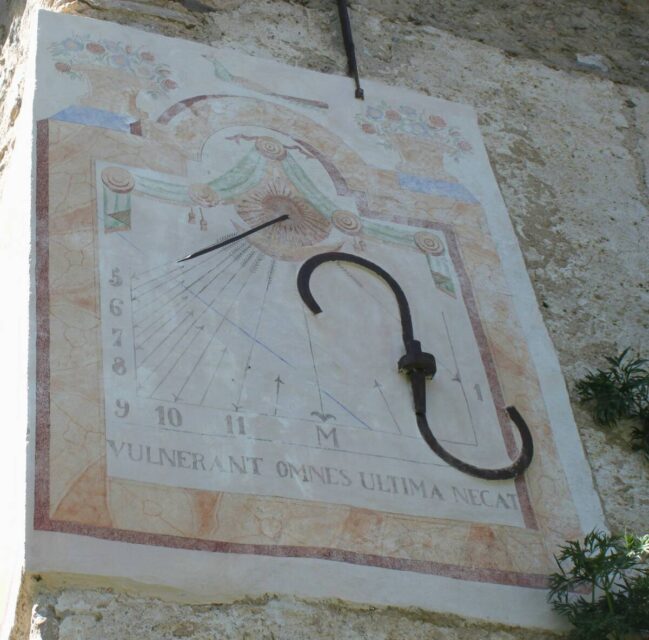
The principle is simple but brilliant: a style (the metal rod) casts its shadow on the dial according to the course of the sun. The result: a direct reading of solar time. No screen, no battery, just the sun and a bit of geometry.
Among the oldest dials, that of the Giraud house in L’Argentière-la-Bessée, painted in the sixteenth century, is the oldest dial. The house is now classified as a historical monument.
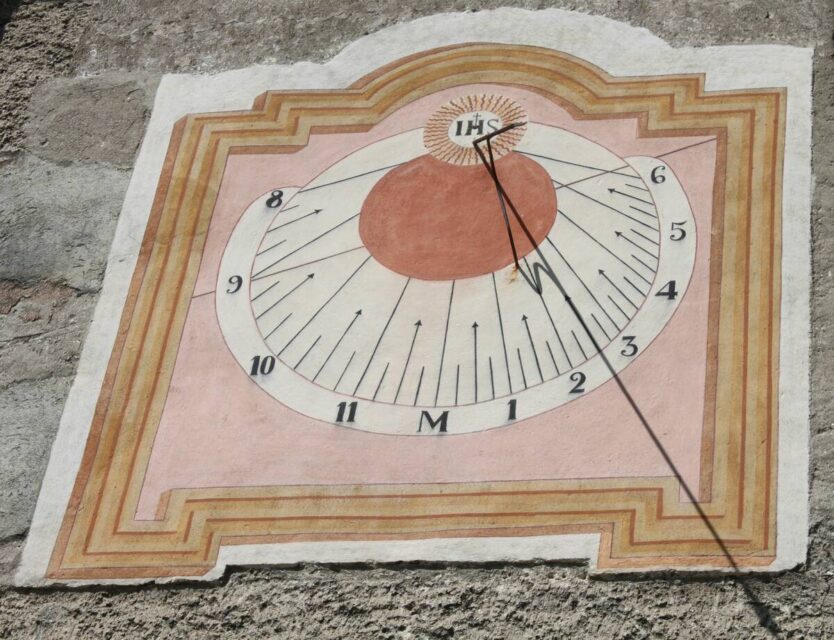
Zarbula, master of painted suns
The name that often comes up in the history of local sundials? Zarbula. Giovanni Francesco Zarbula, to be precise. This painter-dialmaker signed dozens of colourful works in the nineteenth century throughout the Briançon region and as far away as Queyras. But behind this name, there was undoubtedly a whole family of dial makers, one of whom took over. Their works can be recognized by the initials Z.G.F. and their decorations: animals, stars, philosophical mottos… In Vallouise, on the house in Bardonecchia, one can read: “Life flees like the shadow”.
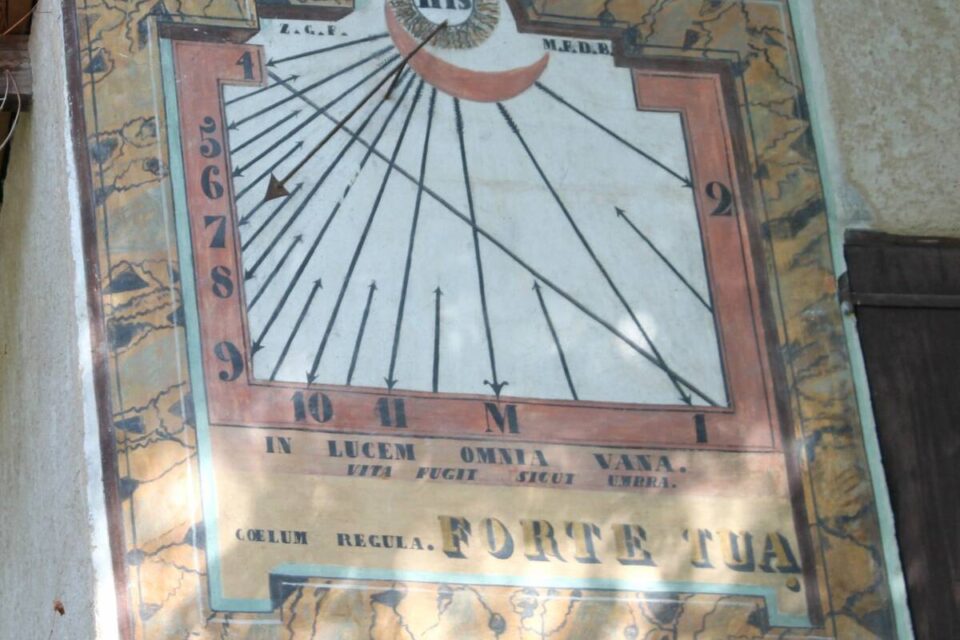
Want to know more?
To learn more, follow Elsa Giraud, guide-lecturer at the Atelier d’Histoire: she tells you about these little pieces of heritage with passion.
Where to admire them?
- 📍 L’Argentière-la-Bessée (Giraud house)
- 📍 Vallouise (house of Bardonecchia)
- 📍 And everywhere else in the sunny streets of the Pays des Écrins!
Your ally: the Hautes-Alpes Heritage app
🧭 Tip: the Patrimoine Hautes-Alpes mobile application guides you on site and reveals the secrets of each dial you encounter.